Showing posts with label collections. Show all posts

Saturday, December 4, 2010

greetings from Ithaca, NY


What hath God wrought? was the message Samuel Morse telegraphed between Washington DC & Baltimore in 1844 to demonstrate the efficacy of the technology. The telegraph lines were built by Ezra Cornell, who built a great fortune from such construction, which, in turn, funded the university where I will reside for 2 years.

Thursday, June 10, 2010

Pictures by Women: A History of Modern Photography at the Museum of Modern Art, NYC


Photographic history is still such a fresh topic, less than 100 years old, basically, that to survey it seems downright capricious, even as it has merited some truly fascinating chroniclers. What is it? Is it a technology? Its economic underpinnings reveal quite a bit about industrialization, & also how industry intersects & affects daily life. Or is it an art? Various attempts to define its formal qualities have also illuminated its visual impact in modern society. What is this weird thing which has made imaging a daily practice, seemingly without a script? A gesture we all do. & yet many of us don't. Is it special or ordinary? Or both? What a paradoxical instrument.

The Museum of Modern Art has been exemplary in collecting & exhibiting photography throughout its history. Along with the publication of texts by Beaumont Newhall & John Szarkowski, as well as that consummate bestseller, The Family of Man, it gave an institutional imprimatur to otherwise disparate materials. Without being hyperbolic, I would suggest that MoMA created the official artistic careers of Diane Arbus, Lee Friedlander & Garry Winogrand (the 3 participants in MoMA's "New Documents" exhibition in 1967). Another exemplary show & publication were the POP reprints of the unknown E.J. Bellocq by Lee Friedlander - another truly extraordinary gesture. & then going back to the 1930s - there is the truly seminal publication by Walker Evans, American Photographs.

What an outrageous claim for any museum: It basically created its own subject.

The current installation of the permanent collection http://www.moma.org/visit/calendar/exhibitions/1041 is an attempt to make a revisionist outline if the very history it wrote initially, but using examples only by women photographers. As a teacher of photo history I have often made fanciful allusions to such a narrative- also stating that it would be curious to make a trajectory out of Black, or gay photographers - or changing continents entirely - a narrative based on Asian or African photographers, as opposed to the French-British-US monopoly of such an imperial timeline. This was a caprice on my part & I was very curious to see the MoMA reinstallation, which will be up for a year. MoMA has truly enviable, deep collections. What would they do w/ such a prospect?

I don't know if the collections show anything we haven't seen before & there is little narrative disjuncture from any previous history, but again, one can see such fine work on display. Among the 19th century work there are examples by Anna Atkins, Clementina Lady Hawarden & Julia Margaret Cameron. Lady Hawarden in particular has emerged in more recent times w/ what were considered private "artistic" views of her lovely daughters, to instead be looked at as a somewhat radical, intense image-maker - is she a dilletantish aristocrat or someone who made distnctly unsettling & proto-expressionistic photography? Part of the fascination of photography is its blurring between professional & amateur skill sets & results. In the long history of criticism this also distinguished Julia Margaret Cameron - often viewed primarily as an eccentric, as opposed to someone who very consciously played w/ the craft of wet collodion negatives & albumen printing, utilizing chance (irregular surfaces, uneven printing, the effects of "accident" in the process) which would be overlooked as an artistic strategy until Diane Arbus began to exhibit prints w/ stains & uneven borders in the 1960s & 1970s. This aspect to Arbus' printing is often overlooked in lieu of her strong subject matter, but is I think integral to its conceptual power - an almost Brechtian sense of the print as itself a kind of meaning. One is always aware that the print is a kind of screen - the image is not direct, although one sees perhaps too much.

My greatest delight may have been in an album by Gertrude Kasebier, who I would regard as among the greatest Pictorialist photographers. Kasebier was both pragmatic & aesthetic, working professionally as well as in an artistic sphere. Kasebier, along w/ Cameron & Hawarden came to photography as a middle-aged person. One could cite that much of her work follows the visual schemata of that time, but I would point out its very tactile sensuality as a transcendence of any convention, & there are some images of a Native American model, Zitkala-Sa, which are amazingly contemporary looking. Consider the source: a middle-aged woman in Brooklyn, working for cash money. Kasebier's resources are so ordinary, but look what she did. MoMA includes a portrait of the self-styled "Baron" de Meyer, born Adolf Meyer - himself an excessively fey, elegant self-creation, looking quite chic & other-worldly, years prior to when he would adopt the spiritualist name "Gayne."

The 20th century view of "women photographers" is much more extensive & includes: Dora Maar, Lee Miller, Helen Levitt, Diane Arbus, & Nan Goldin. I placed these names in a chronological order. Maar & Miller were overshadowed by their romantic affiliations in their lifetimes, but both have done photographic work which merits attention. Maar is often viewed visually as the prototype for Pablo Picasso's "weeping woman" of the 1930s, most prominently appearing in the painting Guernica but also appearing in innumerable other images.Picasso may be the ultimate male artist who besides having "periods" of styles, could also make a timeline of his career using his various lovers as calendars. In any literature, Dora Maar, emerges as a very strange, troubled character, who went from being a member of Breton's surrealists to following the Catholic Church. As someone whose partial education was by French communists who were also devout Catholics (merci, Mme Tool et aussi Sylvie Carduner), I can understand this, although I would say it perplexes me somewhat. Maar's photographs have been seen primarily since the 1980s exhibition of surrealist photography at the Corcoran Gallery curated by Rosalind Krauss & Jane Livingston, "L'amour fou." One cannot locate a distinct style in the images, or a consistency between them, but they can be quite compelling to look at. Maar had been trained as a commercial photographer - regardless of the skill set involved, there is a lively & strong visual intelligence to the work

Also in terms of writing history, I would say history is rewritten, not written - it is a continual process of reinvention & "the history" of photography made by women is but one prism of a multi-faceted crystal.

For sheer extravagance the career of Lee Miller warrants the various books & exhibitions that have been made of it. Miller would be known simply by the many gorgeous photographs made of her, primarily by Man Ray, as well as her presence in the Jean Cocteau film Blood of the Poet.. A girl from Nyack, NY, she had been a fashion model before becoming involved in the Parisian demimonde in the 1920s. While one could cite her role as an artists' model as her primary achievement, a look at her photography, which as a war correspondent in WWII was fairly extensive, shows a very distinctive presence.

War photography is so strange: how does one judge it? by formal qualities? Does that suffice? The gravity of most war photography is very intentional - it has an agenda & it was for a particular publishing purpose. If one were to look at possibly more eccentric examples wherein graphic qualities are brought in - I would cite the work of both Cecil Beaton & Lee Miller. Beaton as a kind of aesthete managed to make highly beautiful pictures of the UK military, as well as ultimately becoming a kind of in-house portraitist for the House of Windsor. Beaton's soldiers are hot - their asses are round & delicious. One gets distracted by their exoticism & their eroticism. Beaton's images are about erotic & aesthetic possibility - his colonialism is as erotic as it is military.

Lee Miller made what is in my estimation one of the greatest photographs ever: her self-portrait, taking a bath in Hitler's bathtub, after his death, in his bunker. Visually it isn't so much, but the absolute weirdness & egotism of it are I think a truly special moment. It is pure concept. & it intersects w/ a global history - most of us feel quite shy about such things. Who enters such a sphere of power via the bathroom? & then treats it as a photo op?

The photo ops of various governments (such as that used by the various Bush administrations) can't hold a candle to this, although they warrant their own study. Lee Miller distinguished herself w/ a social aplomb I cannot imagine (nor do I expect to ever be in proximity to Hitler's bathtub or its equivalent, in my time).

I am curious to see how the years reveal Diane Arbus, now that her archives are at the Metropolitan Museum (which also houses the archives of Walker Evans). My sense is that there is much more work there than one would expect. Arbus was a working magazine photographer, with constant deadlines. The 2 official documents of her work - the 1972 MoMA catalog, & the Met publication Revelations are 2 very discontinuous books. The MoMA catalog is one of the seminal photographic publications & events of the late 20th century. Contemporary students seem a bit unimpressed, but I would cite its publication as one of the truly important moments of photographic history - for my generation (already too young, a full generation later) it was one of the most provocative photographic occurrences available. Lucky are we to have it. Given the potential tediousness of most photography books, this was so skewed, so in depth & so incorrect (outlining all sorts of visual taboos) & it offered no way out - it was entirely unredemptive! LIfe is miserable & strange & if you're lucky, you're retarded! I hate to put it in such bald terms but when I think of what is important about it, is its absolute lack of propriety.

Given the apolitical formalism of much 1960s art, it's emphasis on form, the work of Diane Arbus is like a a kind of mold eating away at any structure. The apartments she looks in in NYC are dirty w/ nicotine residue, they are populated by unhappy sorts. it sucks. NYC is a miserable global city of people who are never quite settled there & are barely in control of themselves. Everyone is in a kind of lumpen hell. If I make may one suggestion, it would be that Arbus' social orbit could be seen as well in the context of the New American Cinema, promoted by Jonas Mekas. The Ken Jacobs film Little Stabs at Happiness may be the most interesting cinematic parallel. But Jacobs & also Jack Smith offer a more holistic vision, & honestly, that's saying something. Neither Jacobs or Smith could be accused of being so hopeful.

There is so much to see in the show. I don't think it realizes any deep revision of photography, but it offers some stunning examples of some great women photographers . . .let's hope that the next history will change history.
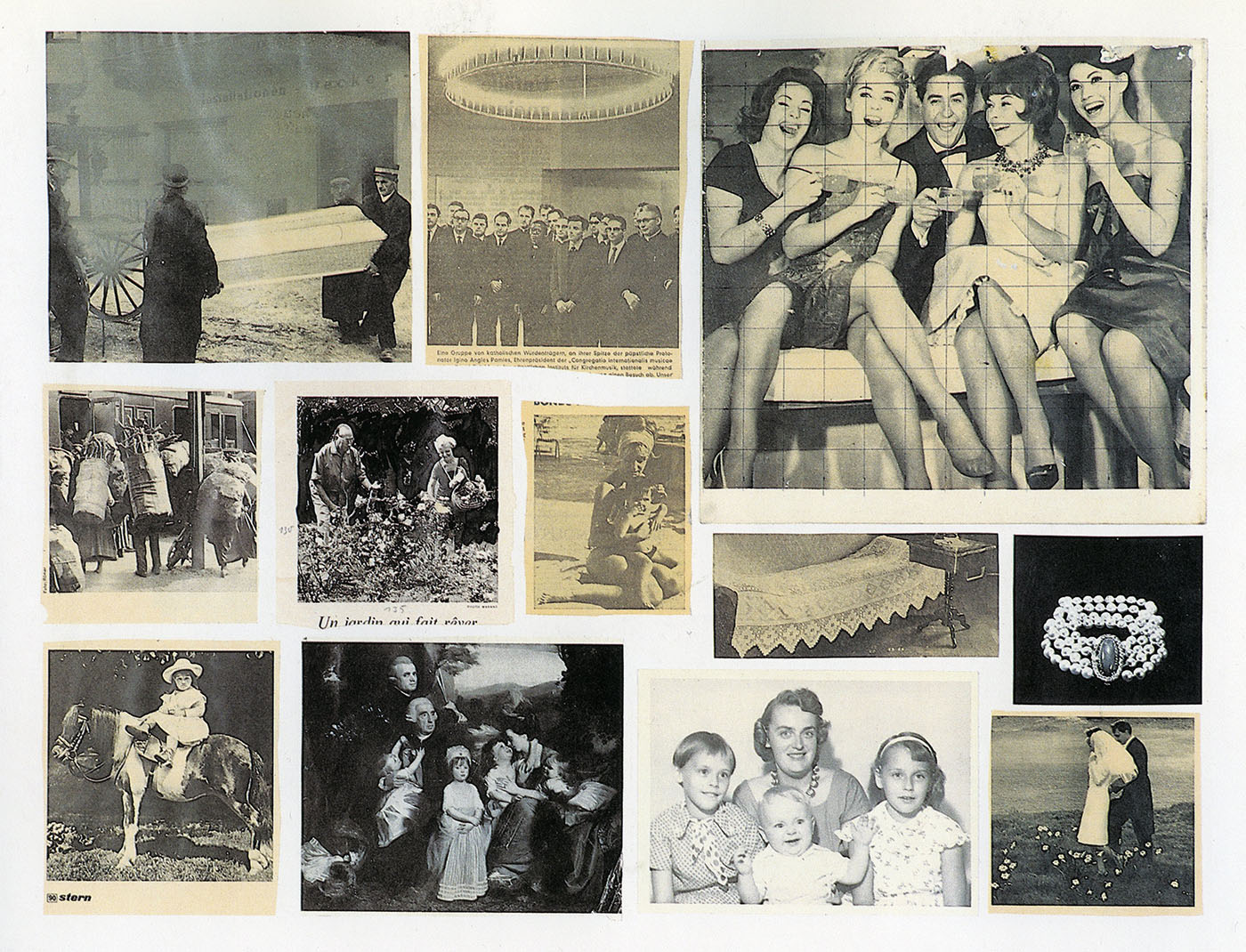
Tuesday, March 9, 2010

Anthony Hamboussi, Newtown Creek - A Photographic Survey of New York's Industrial Waterway


Newtown Creek: A Photographic Survey of New York?s Industrial Waterwayby Anthony Hamboussi is a journey around the perimeters of the Newtown Creek in New York City, an industrial canal which separates north Brooklyn from the western perimeters of Queens, flowing westward towards the East River. It is a self-propelled project, which began with Hamboussi's knowledge of the area, beginning in a childhood in nearby Maspeth, Queens. A seemingly casual project became an obsessive chronicle of several years. The images are presented chronologically which suits the essentially private nature of the enterprise, that of Hamboussi's journey into a polluted heart of darkness within New York City limits. Thoroughly researched & plotted, Hamboussi's itinerary also incorporated intuitive aspects, which can be seen in the fitful un-mappings of the area, giving it more the fitful mutability of dreams, in its starts & stops & divergences, while it inventories a large area of mixed industries.

I have been struck by how many New Yorkers do not know where the Newtown Creek is, although it is a ubiquity to those living in Greenpoint, Bushwick, Long Island City, Maspeth. The community with the most unlikely name in such a gray mess is Blissville, which straddles a cemetery & a Best Western Motel, on the Queens side. The creek stinks. It is poisonous. Its most notable landmark is the sewage treatment plant through which flows 3/4 of New York City's waste (& which now features a remarkably innovative park within its facilities). Good friend of mine once lived in Greenpoint, at the end of Manhattan Ave., on the other side of the Pulaski Bridge from the sewage treatment plant, which when the wind blew in a certain manner, mixing with the scents of a nearby scented candle factory, the area would be imbued with odors of intense sweetness & shit, even for those with a high gag threshold. There are now 2 centuries of industry layering its shores, & within it the boundaries have blurred between public & private, as streets mysteriously disappear into the gated confines of corporations, as maps mutate with no reason other than as the residue of decades of corporate aggression homesteading on these filthy borders. Seemingly deserted, it is actually active & dynamic as an economic nerve, sinking below the horizon of freeways, warehouses & factories.

Perhaps the most acute irony I could discover about the area is that in the 18th century, before its industrialization, the Newtown Creek gave its name to the first cultivated apple in the US: the Newtown Pippin. Grassy meadows sloping down to sweet waters, a peaceable kingdom of fish & fowl, a New World . . .

At this point we can only take someone's else's word on this. Hamboussi's photos show a diverse area of industry & infrastructure. While the frontage on the East River is now being developed as a corridor of high-rise apartments, the filthy core of the creek is still a crazy-quilt cross-section of industries & abject histories.

What will happen to the parking lot for the Fink Means Good Bread trucks? What pollutants were left behind by Phelps Dodge, before its site was taken over for the Fresh Direct warehouse? How can National Grid justify legally its prohibition of photography at its perimeter, outside its fenced borders?

Hamboussi looks at the Creek with the eyes of both an insider & an outsider. Given the lugubrious tally of industry & its aftermath at hand, Hamboussi's photography has a contrasting lightness of touch. While I know the work he has put into it, the images flow with their attention to detail, to the ability of Hamboussi to guide us through a landscape which would be so easy to ignore in its harshness, yet which reveals so much about the world we live in.

Thursday, March 4, 2010

Herve Guibert, Ghost Image


Herve Guibert's L'Image fantome was published initially in 1982. The English translation, Ghost Image (Green Integer), by Robert Bononno, I have came out in 1996, from Sun & Moon Press, and is available currently from Green Integer Press. The book is comprised of short written pieces which were published originally in Le Monde. A posthumous volume, La Photo, inéluctablement, was published in 1999, which has not yet appeared in English.

Guibert, known primarily for his books, also photographed. Several years ago I saw an exhibition of his photos at the Cultural Services of the French Embassy, on upper Fifth Ave., just below the Met, & I have a book published by Schirmer/Mosel. From 1993! (It seems so not so long ago).

The pieces in Ghost Image are short, some the length of a paragraph. Although notable photographers are mentioned (Henri Cartier-Bresson, Diane Arbus, August Sander), the pieces discuss photography in the everyday: Family photos, identity photos, album covers, film stills, etc., as well as the acts of photographing, the tensions & disappointments of it. I enjoyed particularly an account of an adolescent infatuation with a still of Terence Stamp in the Fellini film Toby Dammit (in which Guibert mistakenly refers to the Stamp character as the devil, when in fact Stamp is more a Swinging London version of Faust, who has sold his soul). There is a diaristic aspect to the writing - family episodes are recounted, memory is intertwined with photography - and it is public and brief, in a form that is perhaps more familiar to blog readers of today. Truly, it seems prescient of so much web writing now, although with a much more delirious perversity and greater powers of observation:

. . . I recall an incident that made a great impression on me when I was 8 or 9 years old. My sister was 12 or 13 at the time, and her breasts were just beginning to develop; high and firm, we had already seen them at the beach the year before, but that was the last time, because the following year they were covered up by a bra. That morning, it must have been a Sunday, my sister was locked in the bathroom. My father was at the door, camera in hand, trying to get in. He said, without hiding his intention, that he wanted to photograph his daughter's breasts, because at that age, the moment of their initial formation, they are at the height of their beauty, and if they weren't photographed then, that state of perfection would be lost. That was the extent of his argument. At the time, he sadly renounced his failed attempt at appropriation through the image and fought against that limit; he wanted to push back by a notch the phase of abandonment, of renunciation and at the same time, extend his role as a father in order to assume that of a lover within the conventions of voyeurism, for between the father and the lover, desire was probably not very different. . . "Inventory of a Box of Photographs"

Photography, in Guibert's book, is a multiplicity of effects. It is a technological reinforcement of morbid curiosities, it facilitates social controls, it supplants memories, dreams and perceptions, replacing them with its own mediated Olympus of illusions.In "Photographic Writing" Guibert finds photographic aspects in descriptive writings by Goethe and Kafka - looking backward from the perspective of the technological present to a pre-photography concealed in language. Without any direct quotations, I find traces of Walter Benjamin, Siegfried Kracauer and Roland Barthes in Guibert's considerations of the social aspects of photography. Barthes makes an appearance as "R.B." in "The Photograph, As Close to Death as Possible" which is an account of Guibert approaching R.B. to photograph him with his ailing mother, who in the interim, died. Guibert presents his own lust for photographing in equivocal terms: it is morbid, it is fetishistic, it is selfish. & the compulsion can be sweet as well.

Written with almost aphoristic brevity, these episodes of photography seem both exceedingly particular & also informed with much larger ideas. To continue with photographic metaphors, these vignettes are like snapshots, fragments which indicate a much larger whole. I last read the book in what must have been 1996-1997, when the translation was published. Rereading it has been as stimulating as I can recall it to have been, with what seems new finds:

A Japanese dancer from the Sankai Juku group dances with a peacock. His entire body is very white, powdered with white clay, and his head is shaved. He wears nothing but a plain linen loincloth tied around his waist and stands out in relief against a wooden backdrop to which varnished fishtails and enormous fins from some cetacean have been attached. He embraces the peacock like a woman in a swoon, and the pattern on the bird's plumage extends his loincloth with a gold-flecked train. We can see that the peacock's thighs and feet are very muscular, like an ostrich, but the dancer keeps them bent, broken at the joints, and immobilized in his left hand, pressed against his side. His right hand encircles the peacock's neck, stretches it, plays with it as if it were a delicate instrument, squeezes it almost to the point of strangling it. Everything is limited to a few contractions, and to the flow of blood, which he must feel and control with his palm: the Japanese dances a kind of slow-motion tango with the peacock, he dances with the peacock's fear, with its vital fear of death. It really is an extraordinary moment, one of great tension, great beauty. But when the dancer releases the terrified peacock, we no longer know where to look, and our eye, which wanders between the dancer and the bird, loses its orientation. The peacock is nothing but a big terrified fowl who scratches around stupidly and snares itself in the cord that restrains its feet. The dancer is nothing but a dancer gesturing slowly. Our fascination has worn off, and rather than be deceived, we prefer to divert our gaze to the empty space between them, where the magic was created, the site of a latent photograph. Morever, when the Sankai Juko group came to Paris, many people, many photographers, returned to the performance with their cameras mounted on tripods. They bought seats in the front row and waited for the appearance of the peacock. They fired away - they were guaranteed beauty. That eminently photographic image, however, doesn't belong to them (what is it that eludes photography here, except the infintesimal movements of contraction of the peacock's neck, which are essential to the dance?), it belongs to the dancer, and he has decided that this will be a dance and not a photograph. And we might reiterate that beauty, like theater, is tied to the ephemeral, and to loss, and can't be captured. Only I would prefer that photographers put more dance (or theater, or cinema) into their pictures, just as the dancer had put photography into his dance. - "Dance"

Saturday, February 6, 2010

Robin Graubard, The Hold Up


Robin Graubard's current exhibition at Participant is an invigorating and expressive exploration of an eclectic range of photographic work. Graubard's images were made both professionally, as a working photojournalist, and photos done for private purposes - one would assume. No information is offered as to the origins of the work, which is one of its great strengths: the photos are displayed in informal groupings, without the linear narrative of a news or personal story. Instead the gallery is more like a box in which photos are kept randomly. We can bring different associations to the images, but they will not explain themselves to us.

The play between recognition and lack of knowledge is a profound aspect to looking at photographs. We see & don't know. Tallies of the contents of the work include: homelessness or squatting, youth culture, music, downtown NYC before gentrification, crime, wars in the Balkans, suburban domesticity, drugs - but making such a list does not reveal much at all. Nor can we know Graubard's involvement - as a paid professional or participant (excuse the pun).

I am impressed with how the show deals with news photography, which in some ways is truly ephemeral. Unattached to a crisis as it occurs in the virtual present tense of media, what is it? We can look at 19th century Civil War photography like the work of Mathew Brady or Alexander Gardner in a comfortable, distanced way, & see it on a museum wall, where it becomes art, as an aesthetic consideration. & likewise at MoMA we can see "iconic" images by W. Eugene Smith of World War II. What becomes imperative in looking at Smith isn't necessarily the situations, but the superlative darkroom technique, the liberal use artistic compositional strategies to make a point.

Looking at Robin Graubard's installation I am struck by what seems to me a very sensitive poignancy in conflating both the "outer" world of media & the "inner" tensions of a private world - it's a model of the shifting levels of consciousness, which we tend to overlook in our overlooked drawers & shoeboxes, of the ephemera we forget but which tells much more than anticipated.

Thursday, December 31, 2009

The Corinthians - A Kodachrome Slideshow


The Corinthians - A Kodachrome Slideshow, edited by Ed Jones & Timothy Prus, published by The Archive of Modern Conflict, is a collection of anonymous Kodachrome slides, dated 1947-1974.

I became aware of the press through another book edited by Jones & Prus, Nein, Onkel, which is also of anonymous material, in this instance, snapshots of Nazi soldiers - material which is a bit more difficult, historically, especially in lieu of its innocuous banality and rich un-self-consciousness (the soldiers being innocuously ordinary, cute, without any distinction). As far as I know, Nein, Onkel is available in the US only through Dashwood Books, & I have never seen a copy of The Corinthians available except through the internet.

While The Corinthians does reference a specific historical conflict like Nein, Onkel, the title is taken from the book of Corinthians in the bible, a series of letters from St Paul which address a decadent society: thus the images hover between being a relic & being an ambiguous indictment. Kodachrome itself is of recent obsolescence, & like much analog film material, now represents its own historical passage in the past tense.

In terms of using the specific materiality of Kodachrome (color transparency, vivid hues with a palette akin to Technicolor)and its anonymous usage, there is Guy Stricherz's book Americans in Kodachrome 1945-1965, which is a much gentler, nostalgic collection. & this is not to diminish the Stricherz collection, either, which has its own fascinations. The title of the Stricherz book also reveals what is often unstated about nostalgia: that nostalgia has national borders, that nostalgia can be used as a technological fantasy of a shared & cohesive history, a Family of Man in lower-case letters. My guess is the images in The Corinthians are primarily from the US, & the sometimes gaudy hues & occasions to photograph are representative of a post-WWII glee, a kind of ascendancy of an ability to observe one's daily life, which over time detaches itself from any context & becomes cryptic. But the shared "American-ness" of the Stricherz book is not apparent in The Corinthians, where instead the images clash, they do not relate to one another, whether by year, region, practice, or taste. What is revealed can seem simultaneously obvious & opaque. What separates the collections of Stricherz and the Archive of Modern Conflict is in the choice of images & their editing. One of the remarkable things about the images in The Corinthians is that they are often uglier than beautiful. The interiors & family scenes can be claustrophobic if not downright unpleasant. This is so against the grain of the fading twilight of nostalgia, in which a partial forgetfulness is often equated w/ sweetness or tenderness, a slight regret along with a letting go - instead the images are jarring, & whether through accident or intent (the difference between we will never know), there is a crudeness, an awkward possessiveness which resonate w/ more craven aspects of the photographic process: the images force the participants into a pantomime of an image-self, as an illusion of what they would be, which is realized w/ an almost violent lack of skills. In this sense The Corinthians reminds me of the vertigo of the images in Wisconsin Death Trip. Vanitas vanitatum.

If one thinks of the billions of snapshots which exist, in utter randomness, the collection of whatever becomes the ad hoc solution to extract any sort of meaning what is otherwise accident & chance. Both The Corinthians & Nein, Onkel posit the amateur photo collection as a kind of black mirror to the past, in a Barthesian sense of lost time, & also in the excesses of detail which add strangeness & confusion to memory.

I would also recommend The Corinthians for it's unusual binding, which reproduces the cardboard mount of a Kodachrome slide, with a window cut in both front & back. This is anterior to the content of the book, but still references the original physical form of the slides. It shows a great deal of concentration to the enterprise, & its tally of vanishing forms.

Tuesday, December 15, 2009

Larry Sultan 1946-2009


Larry Sultan's work is most familiar to me from books: Evidence, Pictures from Home, and The Valley. The work also exists as gallery prints & has been used in magazines spreads. My personal attachment is to the books & the experience such a form offers: private, on my own time.

Evidence, made with Mike Mandel, is a collection of industrial photographs, which as a collection, leads to a kind of non-sense of imagery. Nothing relates, nothing really means anything, but the viewer is face-to-face with "evidence" of something somehow. There is a dry humor in the residue of corporate imagery, it's utter obscurity & obsolescence, but it is also a kind of psychic downward spiral, a tension between the kitsch of execution & a horror of banality.

Unlike a lot of work which uses vernacular imagery often as a kind of nostalgia, or a collection used to codify forms, Evidence uses imagery which traffics between the institutional & the ridiculous - as archaeology, the imagery is ultimately embarrassing in its weirdness, its cryptic passages between intention & effect.

There is an agitational quality to Sultan's work, an unrest, a meta-critique of the uses of photography which is most apparent in Evidence, in which the imagery is found, but which also informs the 2 long-term projects, Pictures from Home, which deals with the suburban culture of Sultan's parents, and The Valley, which is "behind the scenes" of the adult film industry.

Pictures from Home uses both Sultan's color photographs of his parents, living on the edge of a golf course, in southern CA, along with frame enlargements of home movies made by Sultan's father. The home movies are predictably bucolic & idealized - vacations, fun, high points. Sultan's photographs seem much darker in comparison, although in extremely lush color, in the brilliant SoCal light, in their acute focus & detail (contra the pictorial inexactitude of the home movies). Sultan's parents are used as kind of a test-case of post WWII prosperity & its retirement, figures placed in an artificial new world of synthetics, hovering in an ahistorical constant present. Sultan's parents become the post WWII nuclear family, severed from kith & kin, adrift in a sea of commodities.

In comparison, the images in The Valley seem the most illustrative, juxtaposed with both Evidence & Pictures from Home. The images can be read easily in either magazine or on a gallery wall: the behind-the-scenes of the adult film industry, on location in rented McMansions in the San Fernando Valley. The images concentrate on the absolute clutter of the houses as sites of filmmaking, in terms of the logistics of the set-ups as well as everything that is necessary to sustain the shoot. Also the images deal with the hours of waiting behind any film project - hours of tedium distinguishing the work involved. While it has some of the romantic appeal of a film like Boogie Nights& a general fascination with the adult film industry in our culture (a Puritanical vision of carnality at its most commodified, i.e. sensible form), the real subject seems to be the conformity & dullness of work, any work. The hideous McMansions of the Valley photograph extremely well: settings of baroque vulgarity, impersonal except for the particularities of bad taste from house to house, & even then nothing is ever unique or outstanding. Everything is prefabricated, mass produced, & strangely empty. The models for the films reiterate the alienation of the architecture & decor in their utter displacement from it. Everything looks kind of awful & inexplicably expensive.

Larry Sultan's photographs for The Valley, printed large, fit comfortably in art galleries, wherein large color photographs are a kind of contemporary salon painting. Akin to PL DiCorcia's images of pole dancers, or the more obscure images of porn sets done by Jeff Burton, which seem more about distraction & daydreaming on the job (Burton was also working for various companies). Still, Sultan's images have a kind of distancing & self-consciousness which keeps them from being pure commodity. The images are rehearsals for images, attempts, auditions, lapses, distractions. The models look mechanical & bored. The theme of scientific management seen in the images of Evidence is sublimated but constant throughout The Valley.

From Evidence to The Valley: dealing w/ corporate imagery, the family, suburbia & sex. Such an engaged & challenging use of the camera & the photograph.

Wednesday, November 25, 2009

Joachim Schmid, Other People's Photographs


Photography as a medium of originality can be explored in museum collections, from the rough-hewn negatives & positives of the calotype, to the MFA mandated images of today. If one were to consider photography not just as another medium, but as a social phenomenon, its ubiquity as well as its banality must be taken into account. From the introduction of the Kodak camera (& image) in 1888, which created a global amateur market, photography has had a role beyond its aesthetics, in the everyday.

The industrialization of imagery, its crazy ubiquity, as well as its acceptance, indicates a faith which may extend beyond the average. The lowest common denominator may be recognition, if nothing else. A tacit faith in doing something, with a machine, which in its objectivity, denotes a moment, its reality.

I first noticed the books of Joachim Schmid on the shelves at Printed Matter. There is a great deal of humor in Schmid's self-published books, such as Phantome, in which a sort of game is involved, matching up media images of criminals with their crimes. Schmid addresses the absolute & unconscious aspect of photography, the fact that it is accepted without a question, as well as its role in daily life, whether or not that is actually clear. It is simply there.

The books,"Other People's Pictures" are a series of POD books available from Blurb. Culled from flickr, Schmid has created his own taxonomies using appropriate key words, & utilizing the daily excess of on line postings. "Other people's pictures" indicates a willingness to share & to be like others as much as it will show a sense of standing alone. Photography is a lonely but ubiquitous enterprise. I is like others.

Schmid's books interject in a daily electronic culture, a vast every-expanding archive of virtual collections.

The apparent clarity of selected keywords ("Mickey" or "Digits" for example) become strange & exotic. Ostensibly each book ordered from Schmid is itself unique in its selection & editing. No two are exactly alike, yet all are so familiar.

Photography in Schmid's book becomes a shared technology rather than a singular expressive medium. Our fantasies are also someone else's & we can see so, easily. On sites such as flickr this may be the salient detail/ which prompts not only an excess of compiling images, but of circulating them in an efficient & globally open manner.

Wednesday, October 14, 2009

Looking In: Robert Frank's The Americans

One of the difficulties of looking at photographic oeuvres in recent retrospectives is the presence of the photographer him or her self, whether as a live presence or the active involvement of an estate. I don't find this remarked upon at all which I find problematic. I have been disappointed in exhibitions of truly great photographers such as Lee Friedlander, Diane Arbus & William Eggleston, primarily by the exhibits having a hagiographic aspect which avoided the nature of the work itself in deference to a museum-mausoleum solemnity of tedious seriousness.

Curiously, the current exhibition of Robert Frank's work for the book The Americans which originated at the National Gallery in DC avoids such institutional tedium, perhaps by virtue of its focus on a particular book & body of work. That the exhibit is about a publication, rather than a more general body of work, is remarkable too, although in some ways the book, in its various editions & incarnations, still appears somewhat peripheral to the images, which are shown in remarkably lush exhibition prints. Highlights of the show for me are a wall of work prints, which are in poor shape & unimpressive technically, as well as a vitrine of various editions of the book which is at the exit of the show. Both show a Robert Frank in process, as it were, as opposed to a grand old man of the medium. It seems unfair to lionize Frank or historicize his work, as what distinguishes it is its ambivalence about imagery & meaning, its intense tension in contemplating the visual. Frank's ambivalence seems young to me & unfinished, unresolved. Seeing such gorgeous prints obscures the work somehow. Perhaps my happiest encounter w/ Frank is in the Tod Papageorge book about Frank & Walker Evans - reading, study seem to be proper forms for looking at Frank. Or I think of the photos of the poet Allen Ginsberg, which can seem unexceptional except for his captions, but what captions they can be! I have yet to see Frank contextualized say in terms of the St Marks Poetry Project, or downtown NY once upon a time.

The Americans is a strange powerful book. Given its ambitious title it is remarkably unspecific about "America" except as a last resort, a vague & difficult window onto troubling opportunities, if at all. The title promises a travelog which never happens except in the most abject manner. Unheroic, crummy, stupid, boring - this is what is revealed stretching from sea to shining sea.

Wednesday, September 23, 2009

Peter Hujar - Photographs 1956-1958


The current show of Peter Hujar's early photographs, dated 1956-1958, at Matthew Marks Gallery, convinces me (not that I really needed to be convinced) that Peter Hujar is one of truly great photographers of our time. "Our time" may be a bit porous - these images are now over 50 years old, & Hujar died in 1987, but perhaps his "time" is now & in the future. My suspicion is that there is much work that has never been seen, like the images in the show, which I do not think have had much circulation.

The photographs are of what are now referred to as "developmentally challenged" children. One of my students, who accompanied me to the show, asked, "Are these special needs students?" These terms are bureaucratic & with all good intentions, more inhuman than any pejorative term in their sentimental but airtight classification. It's language which acts as a placebo for the speaker, absolving the speaker of having to say much else. The Hujar images predate a very well-known body of work by Diane Arbus of the same subject, by about 10 years & have some structural similarities (square format, black-&-white). The Arbus images are rightly famous for their moodiness, their sense of isolation & incarceration. Peter Hujar's images have a very different emotional tenor in what could be seen as ebullience, anarchy & a very deep sweetness. Both bodies of work were done in institutions - institutions for those who would be classified (using the volume titles employed by August Sander for his planned books of portraits) as among "The Last People." Such institutions also function as as a kind of container for society, hiding away its defective members. The intrusion of a photographer in such a setting has many possibilities, such as a journalistic narrative of whatever stripe. What distinguishes both the Arbus & Hujar portfolios is their media-uselessness. Why? What for? The photographer in her/his naked voyeurism shows a curiosity & suspension of judgment which allows for multiple readings of the subjects & their images. We can't look at the photos & know automatically what to think.

Peter Hujar's photographs resonate with me so strongly. Everyone I know thinks he's great, so I feel a bit presumptuous saying this, but he appears neglected in histories & anthologies. His photographs of animals are as strong as his portraits. His photographs of nighttime streets are as erotic as his nudes. Hujar's work is permeated with mortality: I hesitate to describe his work as morbid, despite the many photographs of dead animals, or the photographs of the catacombs in Palermo, or a portfolio I saw once of the tableaux of the long-gone Wax Musee at Coney Island, which was primarily of serial killers in action (I remember Richard Speck strangling a nurse, in particular). Or the portrait of Candy Darling in her hospital bed. Or the portrait of Edwin Denby just before Denby died. Nevertheless in such finely wrought forms I think there's a strong sense of corporeality: Flesh has its own life, whether it is a waddling duck or the enormous cock of a nude boy.

Estimations of mortality are written out of a lot of current photographic discourse. The photographic is understood more in semiotic terms, or as a cultural product. Hujar's photographs are more like a 17th century memento mori image: a Dutch bouquet in which in such splendid beauty there is the beetle & the worm, slightly hidden, the slight but advancing wilt, with their intimations of passing.

I try to discern: what are my favorite Hujar images? The list just extends - it is a useless prospect. I hesitate to use the word "classic photography" to describe his work, which evokes more formal black-&-white images of western landscapes or abstractions of natural forms done with The Zone System, yet Hujar is part of such a former photographic world. Hujar's work can be classified in very traditional terms: portraits, nudes, cityviews & landscapes. But the work is intense & immediate which undermines its great formality. Hujar's work is imbued with a remarkable moral sense: the same level of carefulness goes towards both a woman passed out in his stairwell on 2nd Ave, or a portrait of Miss Peggy Lee. I am also reminded of this in his portraits of the elderly Edwin Denby or Lotte Eisner. I have little reference to Hujar's psychology, except in the work, which is perhaps a more ideal way to contemplate anyone's creative endeavors. One hopes that at some point there is a truly great book of this work, in all its scope.

Thursday, March 19, 2009

Walker Evans and the Picture Postcard


Walker Evans and the Picture Postcardat the Metropolitan Museum explores what has been otherwise a footnote in the surveys of the work of Walker Evans: his postcard collection. & in relation to Evans' own photographic practices.

The premise of the exhibition flirts with kitsch. Evans is the great modernist photographer: as much as one can locate content in his images (the things they are of - Victorian houses, the families in Let Us Now Praise Famous Men, detritus of the Great Depression, etc.), the content is subordinate to the framing, the presentation, the bigger project of Evans' work as a whole. From a formalist point of view it all becomes radical composition, a kind of interrupted illustration, illustration aware of itself & pulling back from meaning, from function, but one could also cite it as an archive of relentless curiosity & disengagement. In Evans' work there is no progress, no movement; all is stasis, & without motivation. Avant la lettre, there is an existential repulsion to social engagement or meaning, as well as a relish of the act of doing, nevertheless.

At this point, institutionally, Evans has entered into an unimpeachable canon of Great Artists, which seems to do him disservice, turning him into a patrician expert, when what seems most vital about him could be described as neurotic, alienated, dissatisfied. Compared with other documentary photographers of the 1930s, from the politically motivated work of Ben Shahn to the spectacular magazine work of Margaret Bourke-White, Evans seems unmotivated, depressively aesthetic, unconcerned. & this gives the work a wider valence of sensibilities, a mood as opposed to the thing itself. Evans valiantly defined his work as "documentary style" as opposed to "documentary" which is perhaps a richer statement now, more meaningful, in what I honestly think is the twilight of documentary work as it disappears from mass media & migrates to the realm of museum practices.

There has been a serious amount of writing about Evans: Alan Trachtenberg, Tod Papageorge, John Tagg, are who I think of, but there is much more. Evans' images were appropriated by Sherrie Levine in the early 1980s in one of the great moments of post-modern photography. & there is not just 1 but 2 biographies of him, as well, in a world wherein there are next to no biographies of photographers (I tell my students that's because most photographers had such boring lives, that it's a dull existence & there's not much to say about it), as well as a fairly blunt memoir about Evans' last years before his death. One unspectacular but meaningful book for me has been Walker Evans at Work, which addresses Evans' work practices. There is a racy passage in John Cheever's journals about Evans, which is in dispute (did it really happen?), but indicates, at least, a psychological tension (for both Cheever & Evans) that is more Patricia HIghsmith than Clement Greenberg. How to add such a literature?

The Met, which now possesses the Evans archives, has done a truly meaningful exhibition & book exploring Evans' interest in the common mass-produced picture postcard. Genealogies of Evans' methods have been traced from the Civil War images of Matthew Brady to the extensive archives of Eugene Atget (inartistic images, factual, informational). The Met show shows another genealogy in strictly banal mass-produced imagery. & Evans, with his large collection (1200 or so), seems all the richer for his interplay with such drugstore imagery. Postcard imagery depends on its accessibility, its simplicity, its lack of hierarchy - anything is fit to be a postcard. & it shows the world now, which means postcards become obsolete, they will always need to be updated.

This obsolescence becomes historical artifact in Evans' collection. Say unlike most photojournalism which deals with a "spot news" aspect to history - seeing it as it happens, Evans' work & likewise the voluminous postcard collection, indicate a history only in retrospect. Evans photographed the detritus of happenstance. Postcards are of an unlikely objectivity, things as they are, presented as such, in an utterly dreary, banal way, which as such becomes quite fascinating.

The Met shows some of Evans indexing, his categories - town centers, industry, etc. These are vaguer & more opaque than what can be found at any flea market, but otherwise, just the same.

Wednesday, June 25, 2008

Lynching Photographs

Lynching Photographs (Defining Moments in American Photography) by Shawn Michelle Smith and Dora Apel is part of a new series from the University of California Press of books about photography, along with studies of Alexander Gardner's book about the U.S. civil war, and Weegee's Naked City. The books are small, basically extended essays - I am curious to see what else will be published.

Whereas the Gardner & Weegee books deal with photography which is seen these days primarily as artistic or in an artistic context - collected institutionally, exhibited, published & celebrated as such; the work discussed in Lynching Photographs has a much darker pedigree & history. Byproducts of lynchings, these images functioned as souvenirs & trophies for the participants, as residue of mob violence which invoked both the done deed as well as a threat of more to come. These are extremely unsettling images in their gleefully banal racism & sadism. Smiling children, smiling revelers - at these public murders. If anything, reading written accounts which detail the specifics of the lynchings is perhaps more to the point, in the thoroughness & extremities of the violence done, which is not articulated so fully in a photograph. Photographs in contrast are much more fragmentary, inarticulate.

The contingency of the imagery is discussed by both authors in the use of the photos by journalists and organizations such as the NAACP to decry lynchings. Both essays, by Smith & Apel, are fascinating in their discussions of how the photographs were used by White and Black groups, from the KKK to the NAACP to the Communist Party. Perhaps it is the relative unfamiliarity of the imagery, unlike say something like war photography which circulates constantly in print, on television & on the internet, & on the museum wall, but I find the photos themselves almost unbearable to look at, & the racist hatred which could generate them quite palpable. Looking at them too much seems to do very little except dull me to them, whereas reading about them does allow one some psychic room to understand them more. Another curiosity about the essays is that one author is a professor of American Studies, the other an Art Historian, & yet such specializations seem a moot point with the material - it would be impossible to distinguish one from the other if it were not pointed out who was who.

Reading the book made me go back to Without Sanctuary: Lynching Photography in America, which is the same collection which was on view at Roth Horowitz, which is discussed in the Smith essay, and later published by Twin Palms Press. The gallery show was extremely popular, & as cited in Lynching Photographs, without interpretation. While such a strategy may be suitable for a gallery exhibit, I cannot help but think that such work is near impossible to look at without some discussion. This may be just the ignorance of my own sheltered "Northern" existence, whereas as I understand it, the collector of the images, James Allen, is from the South & lynching is identified primarily as being Southern (although one can find examples from Indiana & Minnesota in the book). As a book, Without Sanctuary, is handsomely designed & printed, & there are trenchant essays included. Still, it is troublesome to see such a luxurious book of atrocities. As a book it may function a bit in the manner of Ernst Friedrich's War Against War, but the opacity of photography, its contingencies, is still a troubling mirror of our world.

Tuesday, May 20, 2008

Bill Wood's Business


Bill Wood's Business by Marvin Heiferman & Diane Keaton is culled from an archive of 4x5 black-&-white negatves of commercial work done by Bill Wood, a photographer & camera store owner in downtown Dallas, working from 1937-1973. There are a total of 20,000 negatives in the archive which was originally saved by the archivist Rick Prelinger, which was later owned by Diane Keaton, & is now a gift to the International Center of Photography. Heiferman & Keaton have collaborated on books of industrial images in the past such as Mr. Salesman; & Keaton is also a photographer. Her book, Reservations, is one of my treasured possessions - & when I go to Miami Beach I look in vain for what is now a lost world of Morris Lapidus & such designs, such as those seen in her images.

Bill Wood's photographs, all done commercially, are a fascinating insight into the social fabric of post WWII USA. An entrepreneur, a public figure, Bill Wood himself emerges as a resolutely cheerful, social figure - a Mason, a lodge member, his name emblazoned on his car & in neon over his store. If anything this shows us an aspect of photography as a kind of thread to the social fabric - from showroom displays to prizewinners to re-enactments of accidents to new buildings & streets - the photograph as a kind of proof & reinforcement of social values emerges, even when we can no longer identify directly what the uses of the images. Both familiar & strange, there is some uncanniness to the images, which are nevertheless deliriously cheerful & matter-of-fact. Lists of the subjects do not do the images justice. I am struck by their constant "can-do" spirit, their euphoric faith in the "new" world of the modern city & suburb, product & display.

As a collection, the book reminds me of Evidence, the book by Mike Mandel & Larry Sultan. Evidence utilizes the obsolescence of the images - that they have lost function & sense - to create a new narrative of images which become enigmatic in their lack of context, again utilizing their familiarity to lead us to a state of un-knowing. The Bill Wood photos do this with their eclectic subject matter(s), rendered as if all of one piece with the uniform clarity of film & flash, yet never revealing their "secret," if there actually is one. I am reminded of the worlds of my parents & their peers, their "new" world of subdivisions & products, from ready-to-wear clothes to frozen vegetables. Perhaps I am romanticizing this epoch, but I do believe they believed they had inherited a new world which was bountiful & extraordinary in the everyday - optimistic values not so apparent in our current world. If there is a "zeitgeist" to the ordinary, I believe it can be seen in this amazing archive of our once brave new world - we see what we have lost, or what is no longer available to us.